
Telecom regulator Trai is considering a proposal to act against calls and messages flagged as "potential or suspected spam" by AI-run solutions deployed by telcos, including disconnection of a mobile number, even in the absence of a formal complaint, officials told ET.
The Telecom Regulatory Authority of India (Trai) is holding discussions with stakeholders to give more teeth to anti-spam measures, they said.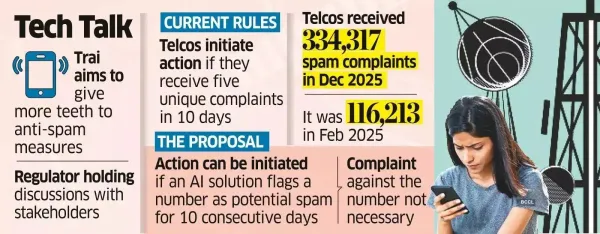
Currently, telcos initiate action against a spammer if they receive five unique complaints in a span of 10 days.
Under the proposal being considered, action can also be initiated if an AI solution flags a number as potential spam for 10 consecutive days, even if there is no complaint against the number.
The move, if implemented, however, may impact gig workers like delivery agents and other frequent callers, whose calls are inadvertently termed as "potential spam" by the AI solutions deployed by telcos on many occasions.
A query sent to Trai regarding the issue remained unanswered at the time of going to press.
As of now, there are no specific rules to identify any unsolicited communication as spam, and the solutions deployed by telcos use AI algorithms to analyse metrics like the sender's usage pattern, frequency of a call or message, duration, etc. on a real time basis to identify any communication as potential spam.
This is being done just to alert the consumer about the probability of the caller being a scammer, leaving the decision to accept or reject the call to the mobile user. And many of the calls identified as potential spam are genuine callers, including gig workers and other commercial entities.
Telcos are flagging 300-400 million calls and messages as suspected spam in a month through the AI solutions, according to officials. When it comes to complaints against spammers, however, the number is much smaller - an average of around 10,000 complaints per day.
As per data shared by communications minister Jyotiraditya Scindia in Parliament last week, telcos received a total of 334,317 unsolicited commercial communications (UCC) or spam complaints in December 2025. The number was as low as 116,213 in February 2025.
Of the complaints, the majority were against unregistered telemarketers, which usually call through a normal 10-digit mobile number.
The Telecom Regulatory Authority of India (Trai) is holding discussions with stakeholders to give more teeth to anti-spam measures, they said.
Currently, telcos initiate action against a spammer if they receive five unique complaints in a span of 10 days.
Under the proposal being considered, action can also be initiated if an AI solution flags a number as potential spam for 10 consecutive days, even if there is no complaint against the number.
The move, if implemented, however, may impact gig workers like delivery agents and other frequent callers, whose calls are inadvertently termed as "potential spam" by the AI solutions deployed by telcos on many occasions.
A query sent to Trai regarding the issue remained unanswered at the time of going to press.
As of now, there are no specific rules to identify any unsolicited communication as spam, and the solutions deployed by telcos use AI algorithms to analyse metrics like the sender's usage pattern, frequency of a call or message, duration, etc. on a real time basis to identify any communication as potential spam.
This is being done just to alert the consumer about the probability of the caller being a scammer, leaving the decision to accept or reject the call to the mobile user. And many of the calls identified as potential spam are genuine callers, including gig workers and other commercial entities.
Telcos are flagging 300-400 million calls and messages as suspected spam in a month through the AI solutions, according to officials. When it comes to complaints against spammers, however, the number is much smaller - an average of around 10,000 complaints per day.
As per data shared by communications minister Jyotiraditya Scindia in Parliament last week, telcos received a total of 334,317 unsolicited commercial communications (UCC) or spam complaints in December 2025. The number was as low as 116,213 in February 2025.
Of the complaints, the majority were against unregistered telemarketers, which usually call through a normal 10-digit mobile number.