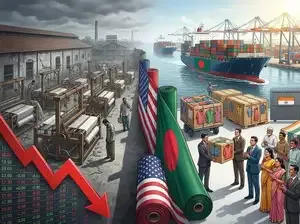
New Delhi: The US-Bangladesh reciprocal trade agreement allows zero tariffs on apparel and textile exports to the US if the manufacturer uses American cotton or man-made fibre inputs.
This provision has raised concerns, but India's textile industry expects the impact to be limited.
A Mumbai-based exporter said preliminary estimates suggest that Bangladesh would gain only marginally, around 2-3%, even if it replaces Indian cotton with US supplies. The higher cost of US cotton would wipe out most to the tariff advantage they reckon.
"US cotton is much more expensive by the time it reaches Bangladesh, whereas India has a geographical advantage."
Additionally, Bangladesh's dependence on imported cotton and man-made fibre, power constraints, and the time and cost involved in sourcing US inputs and realigning supply chains would restrict the immediate impact of the tariff provision on Indian exports, they said.
Under the agreement, the US has cut tariffs on Bangladesh goods to 19% from 20% and will also establish a mechanism allowing a specified volume of textile and apparel imports from Bangladesh at a zero reciprocal tariff, with the quota linked to US exports of textile inputs such as cotton and man-made fibres. "This mechanism will provide that a to-be-specified volume of apparel and textile imports from Bangladesh can enter the United States at this reduced tariff rate, but this volume shall be determined in relation to the quantity of exports of textiles, e.g. U.S. produced cotton and man-made fiber textile inputs, from the United States," the joint statement issued Monday said. Bangladesh's readymade garment sector employs around 4 million workers, contributes about 10% to its gross domestic product and accounts for over 80% of export earnings.
Bangladesh is India's top destination for cotton exports. India's cotton shipments to Bangladesh rose 18.3% to $2.8 billion in FY25 from $2.4 billion in the year before, while exports of cotton to the US increased 10.3% to $105.1 million over the same period.
The US has reduced tariffs on Indian goods to 18% from 25% and withdrawn the additional 25% levy imposed for purchasing Russian oil. However, some exporters cautioned that the US-Bangladesh arrangement could still divert some garment orders from India to Bangladesh. They suggested India should seek a similar arrangement for Indian textiles to the extent of cotton imported from the US.
"We have requested the Indian government to receive the tariff advantage on whatever American cotton the Indian industry uses," the Mumbai-based exporter said. While India's export of textile and allied products to the US fell by 6.1% year-on-year between April-November FY26 to around $6 billion, shipments to other countries rose over the same period, making up the fall. Overall, such exports were up 0.3% over this period from a year earlier.
This provision has raised concerns, but India's textile industry expects the impact to be limited.
A Mumbai-based exporter said preliminary estimates suggest that Bangladesh would gain only marginally, around 2-3%, even if it replaces Indian cotton with US supplies. The higher cost of US cotton would wipe out most to the tariff advantage they reckon.
"US cotton is much more expensive by the time it reaches Bangladesh, whereas India has a geographical advantage."
Additionally, Bangladesh's dependence on imported cotton and man-made fibre, power constraints, and the time and cost involved in sourcing US inputs and realigning supply chains would restrict the immediate impact of the tariff provision on Indian exports, they said.
Under the agreement, the US has cut tariffs on Bangladesh goods to 19% from 20% and will also establish a mechanism allowing a specified volume of textile and apparel imports from Bangladesh at a zero reciprocal tariff, with the quota linked to US exports of textile inputs such as cotton and man-made fibres. "This mechanism will provide that a to-be-specified volume of apparel and textile imports from Bangladesh can enter the United States at this reduced tariff rate, but this volume shall be determined in relation to the quantity of exports of textiles, e.g. U.S. produced cotton and man-made fiber textile inputs, from the United States," the joint statement issued Monday said. Bangladesh's readymade garment sector employs around 4 million workers, contributes about 10% to its gross domestic product and accounts for over 80% of export earnings.
Bangladesh is India's top destination for cotton exports. India's cotton shipments to Bangladesh rose 18.3% to $2.8 billion in FY25 from $2.4 billion in the year before, while exports of cotton to the US increased 10.3% to $105.1 million over the same period.
The US has reduced tariffs on Indian goods to 18% from 25% and withdrawn the additional 25% levy imposed for purchasing Russian oil. However, some exporters cautioned that the US-Bangladesh arrangement could still divert some garment orders from India to Bangladesh. They suggested India should seek a similar arrangement for Indian textiles to the extent of cotton imported from the US.
"We have requested the Indian government to receive the tariff advantage on whatever American cotton the Indian industry uses," the Mumbai-based exporter said. While India's export of textile and allied products to the US fell by 6.1% year-on-year between April-November FY26 to around $6 billion, shipments to other countries rose over the same period, making up the fall. Overall, such exports were up 0.3% over this period from a year earlier.