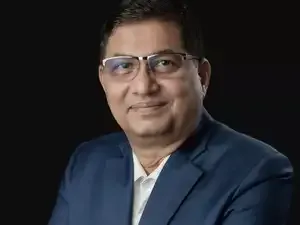
Udaya Kumar Hebbar, Deputy Chairman, CreditAccess India
CreditAccess India BV, the Netherlands-based owner of India's largest microfinance company CreditAccess Grameen, is looking to bring in new investors to allow some of its long term shareholders to exit.
The promoter's deputy chairman at the supervisory board Udaya Kumar Hebbar spoke to ET's Atmadip to explain the future investment strategy as well the promoter's vision for CreditAccess Grameen. He also shared his views on India's microfinance market as a whole.
Edited excerpts
How do you see the microfinance market evolving in India after several ups and downs in quick successions?
The Indian microfinance industry has a proven track record of demonstrating sustainable growth and profitability, despite various macroeconomic cycles and business challenges. Every crisis in the past became a catalyst for the industry to emerge stronger. The Andhra Pradesh crisis in 2010 led to development of a regulatory framework for microfinance. Demonetisation in 2016-17 fast-tracked the transition from cash loan disbursements to digital loan disbursements. The Covid crisis in 2020-21 facilitated the journey towards cashless collections and today, 20-30% of microfinance industry repayments happen digitally. The recent microfinance industry crisis led to formulation of lending guardrails to promote more balanced and sustainable growth.
On the back of an improving rural economy, changing customer dynamics, expanding scope for entrepreneurial businesses, and rapid penetration of digital services, there will be a lot of scope for microfinance players to aim for multi-pronged growth in future.
The recent change in microfinance regulations allowing microfinance players to diversify up to 40% of their total assets into other asset classes, will help microfinance players to create significant customer lifetime value through up-sizing, up-selling and cross-selling across various financing solutions.
How is CreditAccess Grameen placed in terms of growth and market making?
We believe that the microfinance industry is in the mode of a strong up-cycle and will grow responsibly over coming years. We are quite optimistic to capitalise on the growth opportunity after having constantly expanded our share over the past couple of years. We have also started to scale-up our retail finance diversification given the increased regulatory limit to build 40% of assets in non-microfinance asset classes. This will help us to achieve our future growth plans coupled with stronger cross-cycle profitability and return ratios.
What is the promoter CreditAccess India's view on the overall scheme of things?
CreditAccess India has a well-established presence of over two decades in microfinance through its operating subsidiary CreditAccess Grameen. Further, CreditAccess India also operates a profitable micro life insurance business through CreditAccess Life Insurance. Our group also successfully established microfinance and micro retail in Indonesia and Philippines.
Overall, as a group we aim to grow at 20% plus CAGR over medium to longer term, enabled by our well-entrenched operating ecosystem. We aim to become the preferred financial partner of our customers in rural and semi-urban markets and meet the growing need for financial services at affordable rates.
Will the promoter, CreditAccess India, look for a strategic equity partner for the lending subsidiary to support the next stage growth?
All the operating subsidiaries of CreditAccess India are well-capitalised to support their future growth. CreditAccess Grameen is currently having a capital adequacy of 26.4% as at December 2025 as against the regulatory requirement of 15%. In a normal operating environment, CreditAccess Grameen is capable of generating 4-4.5% return on assets and 18-20% return on equity. Hence, the current capital and future internal accruals will be sufficient to support a 20% plus growth over the medium term.
However, CreditAccess India is always open to explore strategic partnerships to further our vision and unwavering aspiration to build a consistently growing business engine over the coming decade. Our insurance business is already well established and profitable from year one itself. Our largest operating subsidiary CreditAccess Grameen is currently expanding its retail finance diversification while evolving with customers, gaining strong traction over coming years. Strategic players to support such growth in retail lending space, growth capital as well as operating expertise such as technology, people, and market access would strengthen us further. CreditAccess Grameen has consistently created value for its shareholders and will continue to explore strategies to maximise value over coming years.
Will CreditAccess India dilute its stake in CreditAccess Grameen?
CreditAccess Grameen is our largest operating subsidiary, and we are happy to claim it as “gold standard” in the microfinance industry having created significant shareholder value over a decade. It is a highly valuable and differentiated NBFC-MFI with over Rs 26,000 crore loan book, more than 45 lakh customers and 21000 employees, over 2200 branches across 16 states & one union territory and aiming to cross Rs 50,000 crore loan book by year 2028. We are known for our unique operating model, close-knit work culture, high employee / customer retention, consistent cross cycle growth, best-in-class profitability and return ratios.
While over 250 existing shareholders of CreditAccess India supported the growth aspirations over the past 18 years or so, some of our shareholders may require liquidity at certain point in time. Therefore, we are always working on attracting strategic partners to take our growth journey forward, aligning with our vision and mission. Hence, rather than dilution, we need to look at this as a continuous creation of opportunities for new shareholders, wherein they participate to provide liquidity to long standing existing investors and participate in our growth journey aligning with our long-term vision of constantly creating value.
So, to keep it simple, CreditAccess is looking to create liquidity for some of its shareholders enabled by new strategic partners / investors to participate in our future growth story. It is also imperative for us to ensure the interests of all shareholders will be kept in mind. In the process, there could be a small dilution, if we get a very strong strategic partner. So that is possible, but we have not yet decided what way we will go. We want to remain the promoter.
The promoter did dilute its holding sometime in 2023 and around that time the group had indicated that CreditAccess Grameen may need new equity partners. Please comment.
In June 2023, CreditAccess India had planned to sell around 10% of stake in CreditAccess Grameen to give partial liquidity to some of its shareholders. However, we sold only around 6% stake for over Rs 1100 crore which was sufficient at that point of time. This step was also to increase free float in CreditAccess Grameen, which was a constant another issue which got addressed. Higher free-float helped to improve liquidity in the stock required for investors to plan smooth entry-exit.
Our focus then was more on executing our microfinance business growth plans post COVID-19, and there was no need for any additional capital requirements for our growth.
What is the progress you made in terms of bringing in new investors at the holding company?
CreditAccess India has already created significant value for its shareholders, who have recovered most of their capital through two liquidity transactions (Rs 500+ crore offer for sale during IPO in 2018, and Rs 1100+ crore block sale in 2023). While there is a need to create further liquidity for its patient shareholders (invested since 2007), the liquidity creation may happen overtime and always with appropriate value creation protecting the interests of all stakeholders, including the minority investors in CreditAccess Grameen.
We have been working on planning a fair market valued exit to some of its patient investors, provided that such transactions contribute to CreditAccess India’s global positioning and protect the long-term stakeholder value creation.
We are always open to join hands with strategic and/or financial partners who share our vision / mission and unwavering aspiration to build a consistently growing business engine over the coming decade.
There were reports on a possible takeover of CreditAccess Grameen. Please comment.
There has been multiple rumoured news published by media houses in the past couple of years, with highly speculative content without considering any facts and developments.
Even the recent media report on possible takeover of CreditAccess Grameen at a discounted valuation is another highly speculative and the company has rightfully refuted the news with appropriate disclosures to SEBI.
As we have discussed, industry is in up-cycle momentum and CreditAccess India has been working on planning a fair market valued exit to some of its patient investors, provided that such transactions contribute to our global positioning and protects the long-term stakeholder value creation.
We would like to reiterate that while we work on creating liquidity for some of our patient investors, we are happy to wait for strategic partners who appreciate the business we have built, and believe in further value creation through participating in our next phase of growth journey considering that we are at a juncture of strong upcycle & proven capabilities of encashing the opportunities.
The microfinance market has suffered every time the lenders tried to grow faster. What would be the ideal growth rate you would advise for the market?
It is always a fact that faster growth without commensurate investment in collection infrastructure can backfire in any business. Excessive growth coming from existing customers can lead to over-leveraging, while faster growth without adequate internal control mechanisms and processes can lead to operational mismanagement and asset quality issues. Hence, in any lending business, the loan portfolio growth needs to be driven by timely and adequate investment in collection infrastructure – branch network, technology stack, internal controls, employee stability, employee skilling and capacity building initiatives, resulting in a robust new customer acquisition and collection engine.
Has the joint liability group-based microfinance lost its relevance? What is the next best model?
We believe that the JLG based microfinance model is still the most efficient and effective model promoting good credit discipline, strong customer engagement, robust control mechanisms and healthy asset quality.
However, the efficacy of the JLG model depends on the operating practices and philosophies of the industry players, navigating the trade-off between fast growth, high operating costs and robust asset quality. Hence the success rate of JLG model will vary from company to company depending on their operating policies and practices
For CreditAccess Grameen, the JLG model has performed extremely well, and we still believe that it will be an essential mechanism for us to bring customers at the bottom of the pyramid to the formal credit in a cost-effective manner. It's true that dynamics have changed and there will be faster evolution from the JLG model to individual loans with a few companies also transitioning into retail finance and digital finance models depending on their cash flows, digital infrastructure and digital literacy.
It is imperative for microfinance companies to build capabilities across various lending models to retain customers and handhold them in their financing journey, which also supports diversification.
Several market observers flagged concerns over evergreening of loans by CreditAcces Grameen. How do you like to respond to this criticism?
We are bound by regulation and regulatory audits. We are bound by the rating agencies which review us regularly.
We would have given a second loan because the customer needs continuous support. The problem of industry or microfinance institutions is that I give one loan and keep it for two years. We think customers don't need anything else. That is the typical mindset we observed.
We thought about this as to why customers should continue to repay you for two years, whether they don't have any up and down in their cash flow. We realise there are many incidents where they need to go back to the money lender.
Like some medical emergencies at home, repairing their home, sometimes they need money for kids' education.
So what they would do otherwise, if you don't provide, if you just give a two-year loan and keep recovering, so then we are not supporting. That is where we said we will create a credit line to customers. And within that line, if there is a need, we will provide subject to eligibility. So there is no question of evergiving. It is a separate loan, run down separately. Each such loan is processed within guardrails and rundown separately.
The promoter's deputy chairman at the supervisory board Udaya Kumar Hebbar spoke to ET's Atmadip to explain the future investment strategy as well the promoter's vision for CreditAccess Grameen. He also shared his views on India's microfinance market as a whole.
Edited excerpts
How do you see the microfinance market evolving in India after several ups and downs in quick successions?
The Indian microfinance industry has a proven track record of demonstrating sustainable growth and profitability, despite various macroeconomic cycles and business challenges. Every crisis in the past became a catalyst for the industry to emerge stronger. The Andhra Pradesh crisis in 2010 led to development of a regulatory framework for microfinance. Demonetisation in 2016-17 fast-tracked the transition from cash loan disbursements to digital loan disbursements. The Covid crisis in 2020-21 facilitated the journey towards cashless collections and today, 20-30% of microfinance industry repayments happen digitally. The recent microfinance industry crisis led to formulation of lending guardrails to promote more balanced and sustainable growth.
On the back of an improving rural economy, changing customer dynamics, expanding scope for entrepreneurial businesses, and rapid penetration of digital services, there will be a lot of scope for microfinance players to aim for multi-pronged growth in future.
The recent change in microfinance regulations allowing microfinance players to diversify up to 40% of their total assets into other asset classes, will help microfinance players to create significant customer lifetime value through up-sizing, up-selling and cross-selling across various financing solutions.
How is CreditAccess Grameen placed in terms of growth and market making?
We believe that the microfinance industry is in the mode of a strong up-cycle and will grow responsibly over coming years. We are quite optimistic to capitalise on the growth opportunity after having constantly expanded our share over the past couple of years. We have also started to scale-up our retail finance diversification given the increased regulatory limit to build 40% of assets in non-microfinance asset classes. This will help us to achieve our future growth plans coupled with stronger cross-cycle profitability and return ratios.
What is the promoter CreditAccess India's view on the overall scheme of things?
CreditAccess India has a well-established presence of over two decades in microfinance through its operating subsidiary CreditAccess Grameen. Further, CreditAccess India also operates a profitable micro life insurance business through CreditAccess Life Insurance. Our group also successfully established microfinance and micro retail in Indonesia and Philippines.
Overall, as a group we aim to grow at 20% plus CAGR over medium to longer term, enabled by our well-entrenched operating ecosystem. We aim to become the preferred financial partner of our customers in rural and semi-urban markets and meet the growing need for financial services at affordable rates.
Will the promoter, CreditAccess India, look for a strategic equity partner for the lending subsidiary to support the next stage growth?
All the operating subsidiaries of CreditAccess India are well-capitalised to support their future growth. CreditAccess Grameen is currently having a capital adequacy of 26.4% as at December 2025 as against the regulatory requirement of 15%. In a normal operating environment, CreditAccess Grameen is capable of generating 4-4.5% return on assets and 18-20% return on equity. Hence, the current capital and future internal accruals will be sufficient to support a 20% plus growth over the medium term.
However, CreditAccess India is always open to explore strategic partnerships to further our vision and unwavering aspiration to build a consistently growing business engine over the coming decade. Our insurance business is already well established and profitable from year one itself. Our largest operating subsidiary CreditAccess Grameen is currently expanding its retail finance diversification while evolving with customers, gaining strong traction over coming years. Strategic players to support such growth in retail lending space, growth capital as well as operating expertise such as technology, people, and market access would strengthen us further. CreditAccess Grameen has consistently created value for its shareholders and will continue to explore strategies to maximise value over coming years.
Will CreditAccess India dilute its stake in CreditAccess Grameen?
CreditAccess Grameen is our largest operating subsidiary, and we are happy to claim it as “gold standard” in the microfinance industry having created significant shareholder value over a decade. It is a highly valuable and differentiated NBFC-MFI with over Rs 26,000 crore loan book, more than 45 lakh customers and 21000 employees, over 2200 branches across 16 states & one union territory and aiming to cross Rs 50,000 crore loan book by year 2028. We are known for our unique operating model, close-knit work culture, high employee / customer retention, consistent cross cycle growth, best-in-class profitability and return ratios.
While over 250 existing shareholders of CreditAccess India supported the growth aspirations over the past 18 years or so, some of our shareholders may require liquidity at certain point in time. Therefore, we are always working on attracting strategic partners to take our growth journey forward, aligning with our vision and mission. Hence, rather than dilution, we need to look at this as a continuous creation of opportunities for new shareholders, wherein they participate to provide liquidity to long standing existing investors and participate in our growth journey aligning with our long-term vision of constantly creating value.
So, to keep it simple, CreditAccess is looking to create liquidity for some of its shareholders enabled by new strategic partners / investors to participate in our future growth story. It is also imperative for us to ensure the interests of all shareholders will be kept in mind. In the process, there could be a small dilution, if we get a very strong strategic partner. So that is possible, but we have not yet decided what way we will go. We want to remain the promoter.
The promoter did dilute its holding sometime in 2023 and around that time the group had indicated that CreditAccess Grameen may need new equity partners. Please comment.
In June 2023, CreditAccess India had planned to sell around 10% of stake in CreditAccess Grameen to give partial liquidity to some of its shareholders. However, we sold only around 6% stake for over Rs 1100 crore which was sufficient at that point of time. This step was also to increase free float in CreditAccess Grameen, which was a constant another issue which got addressed. Higher free-float helped to improve liquidity in the stock required for investors to plan smooth entry-exit.
Our focus then was more on executing our microfinance business growth plans post COVID-19, and there was no need for any additional capital requirements for our growth.
What is the progress you made in terms of bringing in new investors at the holding company?
CreditAccess India has already created significant value for its shareholders, who have recovered most of their capital through two liquidity transactions (Rs 500+ crore offer for sale during IPO in 2018, and Rs 1100+ crore block sale in 2023). While there is a need to create further liquidity for its patient shareholders (invested since 2007), the liquidity creation may happen overtime and always with appropriate value creation protecting the interests of all stakeholders, including the minority investors in CreditAccess Grameen.
We have been working on planning a fair market valued exit to some of its patient investors, provided that such transactions contribute to CreditAccess India’s global positioning and protect the long-term stakeholder value creation.
We are always open to join hands with strategic and/or financial partners who share our vision / mission and unwavering aspiration to build a consistently growing business engine over the coming decade.
There were reports on a possible takeover of CreditAccess Grameen. Please comment.
There has been multiple rumoured news published by media houses in the past couple of years, with highly speculative content without considering any facts and developments.
Even the recent media report on possible takeover of CreditAccess Grameen at a discounted valuation is another highly speculative and the company has rightfully refuted the news with appropriate disclosures to SEBI.
As we have discussed, industry is in up-cycle momentum and CreditAccess India has been working on planning a fair market valued exit to some of its patient investors, provided that such transactions contribute to our global positioning and protects the long-term stakeholder value creation.
We would like to reiterate that while we work on creating liquidity for some of our patient investors, we are happy to wait for strategic partners who appreciate the business we have built, and believe in further value creation through participating in our next phase of growth journey considering that we are at a juncture of strong upcycle & proven capabilities of encashing the opportunities.
The microfinance market has suffered every time the lenders tried to grow faster. What would be the ideal growth rate you would advise for the market?
It is always a fact that faster growth without commensurate investment in collection infrastructure can backfire in any business. Excessive growth coming from existing customers can lead to over-leveraging, while faster growth without adequate internal control mechanisms and processes can lead to operational mismanagement and asset quality issues. Hence, in any lending business, the loan portfolio growth needs to be driven by timely and adequate investment in collection infrastructure – branch network, technology stack, internal controls, employee stability, employee skilling and capacity building initiatives, resulting in a robust new customer acquisition and collection engine.
Has the joint liability group-based microfinance lost its relevance? What is the next best model?
We believe that the JLG based microfinance model is still the most efficient and effective model promoting good credit discipline, strong customer engagement, robust control mechanisms and healthy asset quality.
However, the efficacy of the JLG model depends on the operating practices and philosophies of the industry players, navigating the trade-off between fast growth, high operating costs and robust asset quality. Hence the success rate of JLG model will vary from company to company depending on their operating policies and practices
For CreditAccess Grameen, the JLG model has performed extremely well, and we still believe that it will be an essential mechanism for us to bring customers at the bottom of the pyramid to the formal credit in a cost-effective manner. It's true that dynamics have changed and there will be faster evolution from the JLG model to individual loans with a few companies also transitioning into retail finance and digital finance models depending on their cash flows, digital infrastructure and digital literacy.
It is imperative for microfinance companies to build capabilities across various lending models to retain customers and handhold them in their financing journey, which also supports diversification.
Several market observers flagged concerns over evergreening of loans by CreditAcces Grameen. How do you like to respond to this criticism?
We are bound by regulation and regulatory audits. We are bound by the rating agencies which review us regularly.
We would have given a second loan because the customer needs continuous support. The problem of industry or microfinance institutions is that I give one loan and keep it for two years. We think customers don't need anything else. That is the typical mindset we observed.
We thought about this as to why customers should continue to repay you for two years, whether they don't have any up and down in their cash flow. We realise there are many incidents where they need to go back to the money lender.
Like some medical emergencies at home, repairing their home, sometimes they need money for kids' education.
So what they would do otherwise, if you don't provide, if you just give a two-year loan and keep recovering, so then we are not supporting. That is where we said we will create a credit line to customers. And within that line, if there is a need, we will provide subject to eligibility. So there is no question of evergiving. It is a separate loan, run down separately. Each such loan is processed within guardrails and rundown separately.